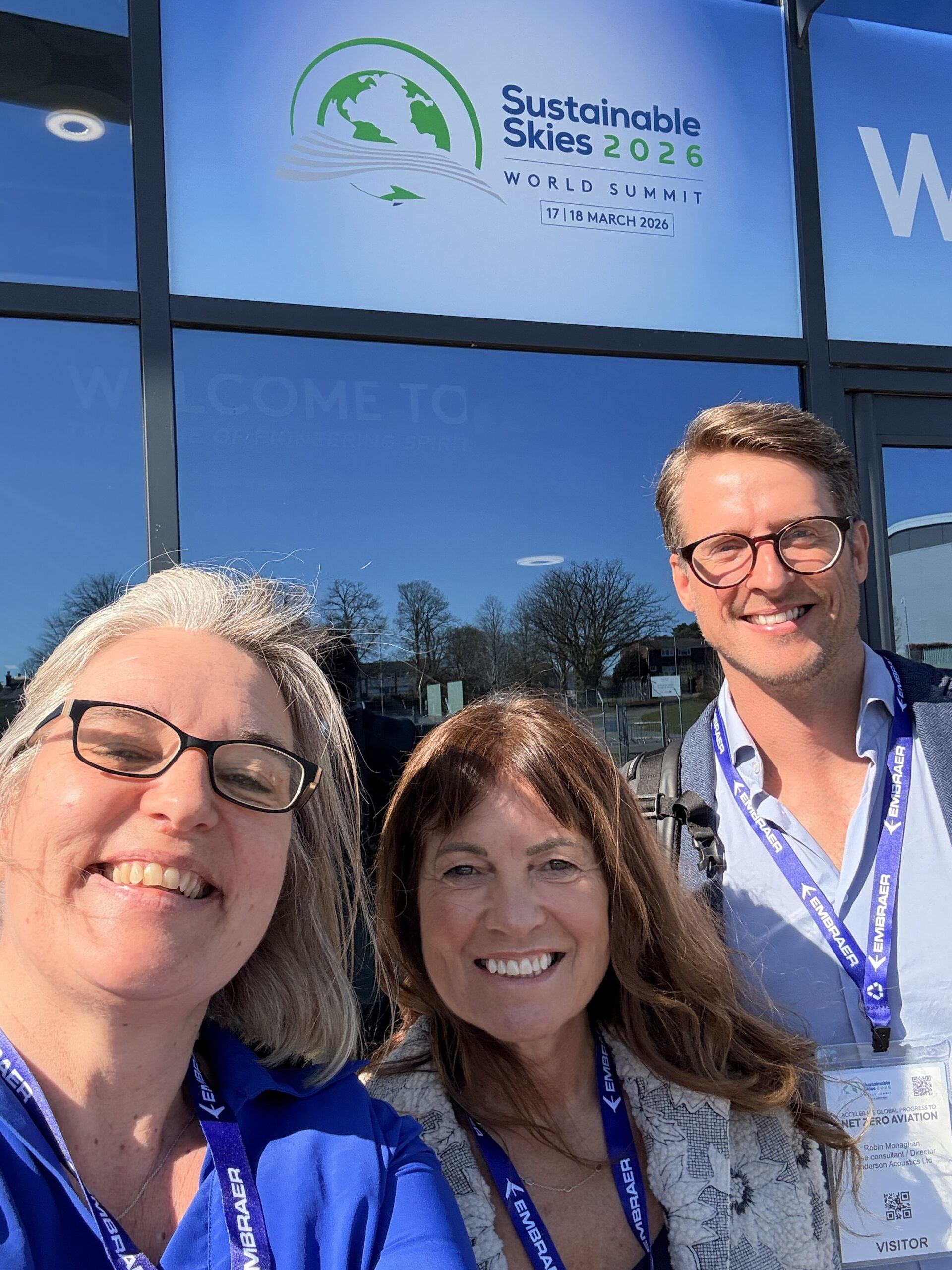
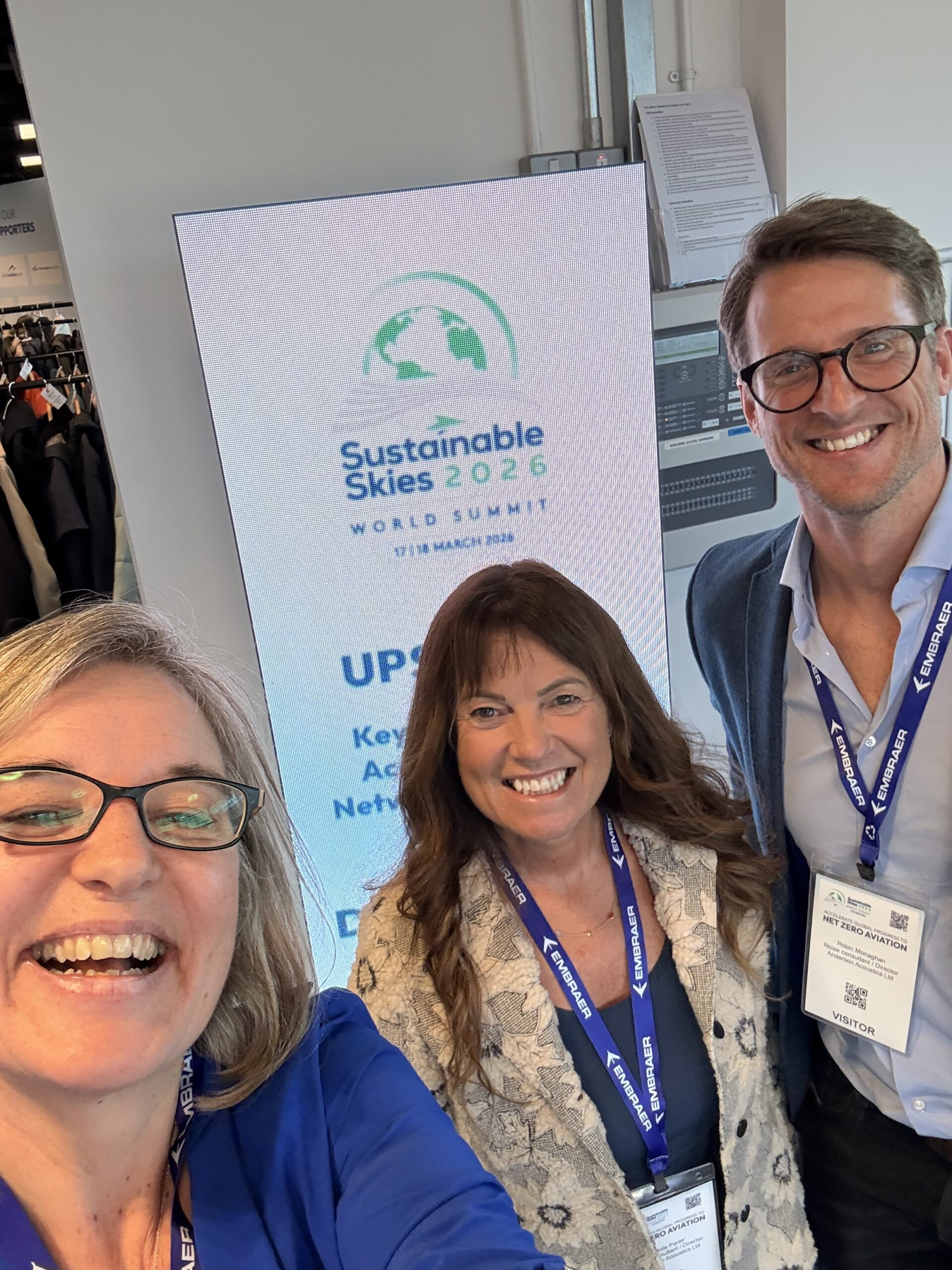
The Sustainable Skies World Summit 2026 brought together industry, regulators and researchers to explore practical pathways to net zero aviation. Much of the conversation focused on technological solutions such as sustainable aviation fuels, hydrogen aircraft and operational efficiencies.
However, from a community perspective, sustainability also depends on how aviation is designed and managed, particularly through flight paths and airspace planning. Decisions about routing and operations can significantly influence how aircraft noise is distributed across communities.
Nicole Porter and Robin Monaghan, attended the summit to follow discussions and to consider how the sustainability debate increasingly intersects with community impacts.
Work such as the Fair & Equitable Distribution (FED) research undertaken by the team has demonstrated how alternative approaches to flight path design may affect the balance of noise impacts between different communities. The study was sponsored by Gatwick Airport Ltd, with financial support from the UK Civil Aviation Authority Airspace Change Support Fund. The work highlights the importance of considering fairness, transparency and community engagement when developing airspace change proposals.
Looking ahead, a key challenge for the aviation sector is ensuring that noise and community impacts are considered early in the design of infrastructure and airspace systems, rather than being addressed only after operational concepts are developed. It also requires systems thinking when considering other environmental impacts such as air quality.
The event provided an opportunity to reconnect with colleagues and explore potential collaborations across the sector. Nicole and Robin were pleased to catch up with Ian Jopson, Sustainability Director at NATS, and to meet new colleagues from the National Centre for Atmospheric Science, including Dr Ruth Purvis.
It was also great to spend time in person with our inspiring friend and potential future project partner Jeni Trice, CEO, Founder and Chief Coding Adventurer at Get with the Program. Our continued discussions explored the idea of a possible future collaboration on a coding adventure titled “Code the Quiet Skies”, aimed at helping young people understand aviation systems, environmental impacts and the role of technology and systems thinking in designing better infrastructure.
This also points to a broader educational challenge. Understanding complex infrastructure systems – where environmental, social and operational factors interact – is increasingly important. Encouraging systems thinking in younger generations, including awareness of aviation noise and other environmental impacts, could help future engineers, planners and policymakers design more balanced and sustainable solutions.