The growth in the application of the soundscapes approach has become very evident throughout the course of 2022. Important events such as Inter-noise, hosted back in August, testify on the array and magnitude of work that is being carried out by the international community on this front. Within the soundscapes approach, there lies a fundamental principle that has been discussed plenty in recent times – aural diversity.
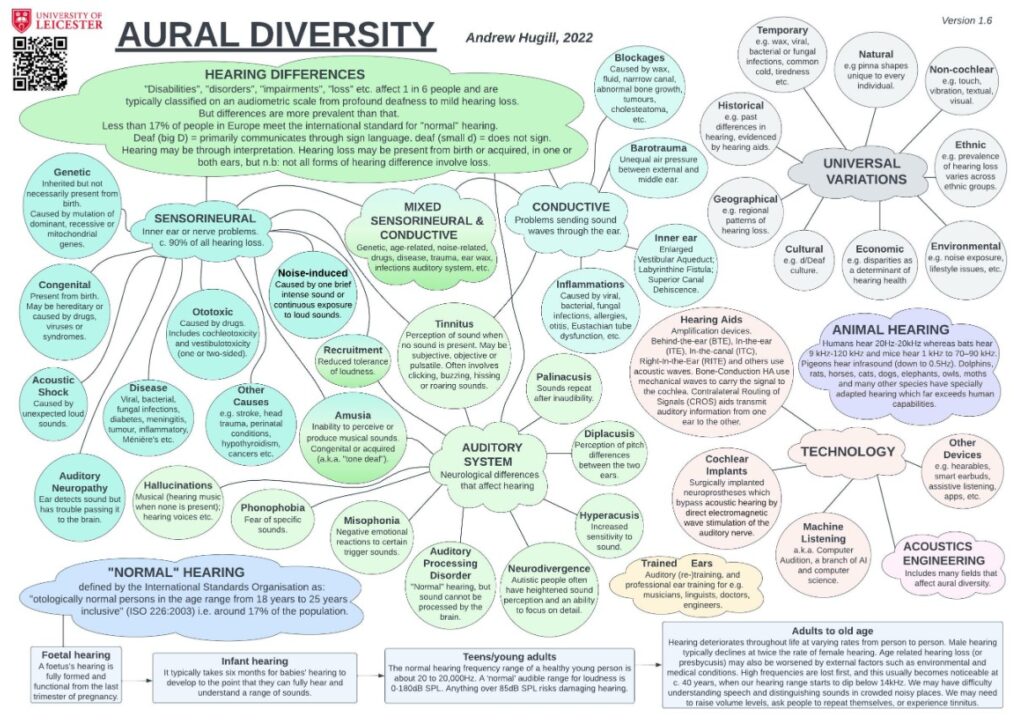
At least ‘1 in 5 people in the world have atypical hearing’ [1] and ‘1 in 6 people possess hearing differences that are measurable enough to be medically diagnosed’ [2]. Applied globally, this could translate to up to 1 billion people.
Moreover, 87% of autistic people are sensitive to noise [3] and acoustics has been found to be the most important comfort parameter for this group [4], ranking above thermal, visual and indoor air quality.
Aural diversity refers to the variability of human hearing and comprises the spectrum between part to full deafness, as well as disorders such as tinnitus (perception of sound when no sound is present, such as clicking, buzzing, hissing or roaring sounds), hyperacusis (increased sensitivity to sound) and misophonia (negative emotional reactions to certain trigger sounds), amongst many others.
The point is, we all hear sound differently, to varying degrees.
It is, therefore, hard to ignore the fact that most standards of practice within our industry embed an approach to acoustic design that assumes a parallel and unanimous experience of sound by all, focusing on guideline limits in A-weighted decibels (dBA) and aiming at reducing these overall noise levels as a sole strategy for dealing with unwanted sound. These are driven by thresholds that are considered suitable for ‘normal’ hearing, specifically defined by ISO as “otologically normal persons in the range from 18 to 25 years inclusive” [5]. This group constitutes approximately 8% of the UK population [6].
Consequently, this benchmark excludes those who fall outside this small age range and the almost equally vast group that is not in possession of ‘otologically normal’ capabilities of hearing [7]. Many of these persons are part of the vulnerable groups referenced in the WHO’s Guidelines for Community Noise 1999 [8], although there are certainly more to consider [9].
BB93 [10] is an exception to the norm and considers multidimensional parameters to assess the need for acoustic solutions in schools, where neuro and aural diverse symptoms can cause significant hinderance in the short-term (not being able to pay attention to a teacher and comprehend their teachings) and long-term (social exclusion due to hypersensitiveness to sound and disadvantageous learning environment). It provides a framework to validate these practices that includes understanding their suitability for persons without otologically normal hearing.
Building Bulletin 93, therefore, deals with a direct need to acknowledge the diversity of human experience and the BB93 update, which is long overdue, is expected to deal with this issue in more detail, based on recent research.

Why is this then not a consideration in most other standards and good practice guides? Shouldn’t this be reflected or even discussed as a consideration in BS8233 [11] and ProPG [12]? It is important to contemplate how autistic people may react to noise events at home, such as the 10 events that are allowable by ProPG in a bedroom at night. In the classroom these can cause distress, but why isn’t it considered when designing homes?
The BSI’s Public Available Standard PAS 6463: 2022 Design for the mind –Neurodiversity and the built environment Guide [13] has now been launched and this welcome document hopes to address some of the gaps, expanding on the acoustic design criteria in BB93 applied to a wider range of building types. However, this document is neither a British Standard nor a statutory document, and therefore stakeholder awareness is needed in order to expand the scope and application of this guidance.
Accounting for aural diversity in acoustic design is to consider the experience of a wide range of people’s response to sound in context. It could be argued that this is part of adopting a soundscapes approach [14], which is a rapidly growing method of how acoustic assessments should be framed.
A soundscapes approach means potentially redefining criteria and aspirations based on the end user’s experience, instead of just applying minimum standards. It requires directly engaging with people or groups who will be using the spaces, understanding if those thresholds are indeed good enough and making sure that the design works for those who need to be supported most by it.
Anderson Acoustics’ Soundscape team applies the approach of designing for the user groups with the most pressing needs acoustically, such as persons who have hearing loss, acoustic sensitivity, social emotional and mental health needs or visual impairments, effectively ensuring the result works for the majority, that have more typical hearing. For example, this is how we approached our Acoustic Vehicle Alerting System (AVAS) projects including the Transport for London Urban Bus Sound and the TIER Mobility E-Scooter AVAS. Of course, this requires finding a balance between practicality and acceptability.
We believe that a soundscapes approach that prioritizes the experiences of people with atypical hearing is an important step to accounting for aural diversity in our projects. There are a number of steps that we think the industry is adopting, and should continue fostering, to help progress this agenda:
Public Engagement – interacting with the persons that occupy and/or are to occupy a space in order to truly understand their needs and how the space and activities therein are managed. This should include more ‘social science’ considerations to gather a representative sample of users, to engage with them meaningfully and use the findings to co-create/adapt designs and management of spaces accordingly.
Consider emerging technology and listening aids – no longer just for those with hearing loss, personal listening aids have developed significantly and ‘hearables’ (in-ear devices to support listening and hearing health) to support a range of aural diversity needs are expected to become ever more compatible with recent Bluetooth developments such as the 2022 ‘Auracast’ protocol.
This is expected to enable public buildings to stream multiple announcements in specific languages and/or to support user specific listening needs, bypassing difficult acoustic spaces and ensuring maximum clarity of the spoken message. Recent research shows Listening Aids have been shown to reduce listening disadvantage in classrooms for students with Speech and Language Needs, AD/HD, Auditory Processing Disorder, Autism and even dyslexia.
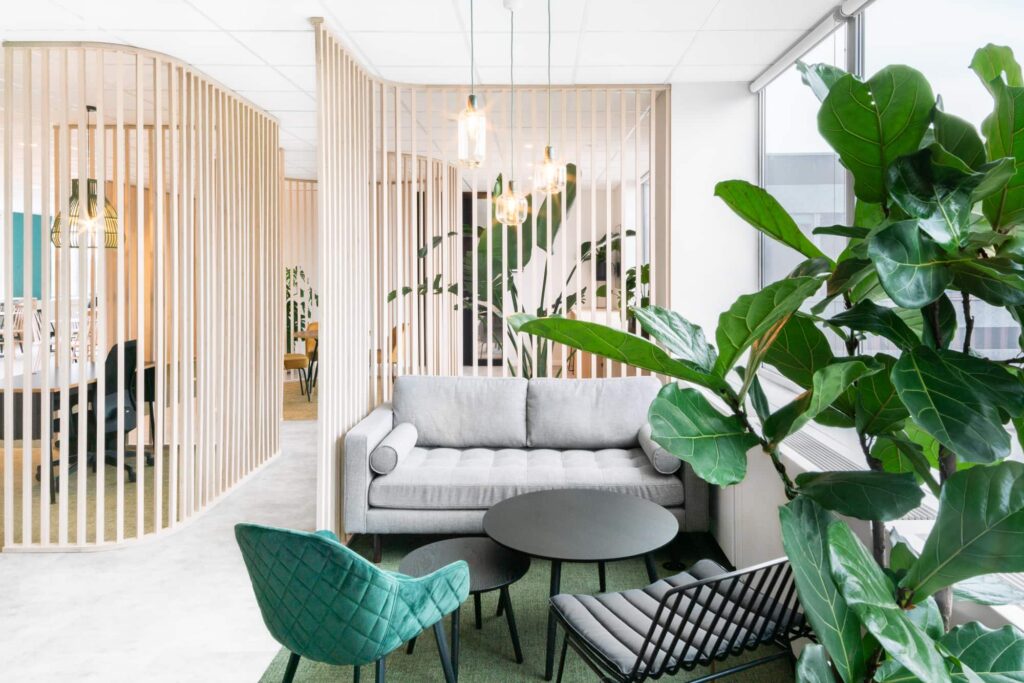
Acoustic Zoning – guidelines and quality standards such as WELL, promote the concept of ‘acoustic zoning’. Acoustic zoning can be considered, or co-created by end-user groups, during the concept stage how different areas of a building can facilitate various types of use in relation to sound and to consider how they will affect or be affected by nearby areas.
Regarding aural diversity, it could be that people with a sensitivity to noise prefer to study or work in an area that is quiet and away from crowds. These areas will ideally be located away from spaces that are for conversation, social interaction and collaboration. A classic example of this is traditional open-plan offices, that only really cater for a single type of sound experience.

Sound Quality assessments and Psychoacoustic measurements – more parameters should be assessed, beyond the decibel and tonal/time frequency penalties, which can more meaningfully interrogate how the sound may be perceived by the end-user. This includes psychoacoustic metrics such as Loudness, Sharpness, Roughness, Fluctuating Strength and overall ratings of Sound Quality based on subjective jury testing.
As well as providing a more rounded view of how a sound will be perceived in context, this approach could also help identify specific aspects of how noise generating products/equipment could be improved [15] and, consequently, better supporting positive listening experiences
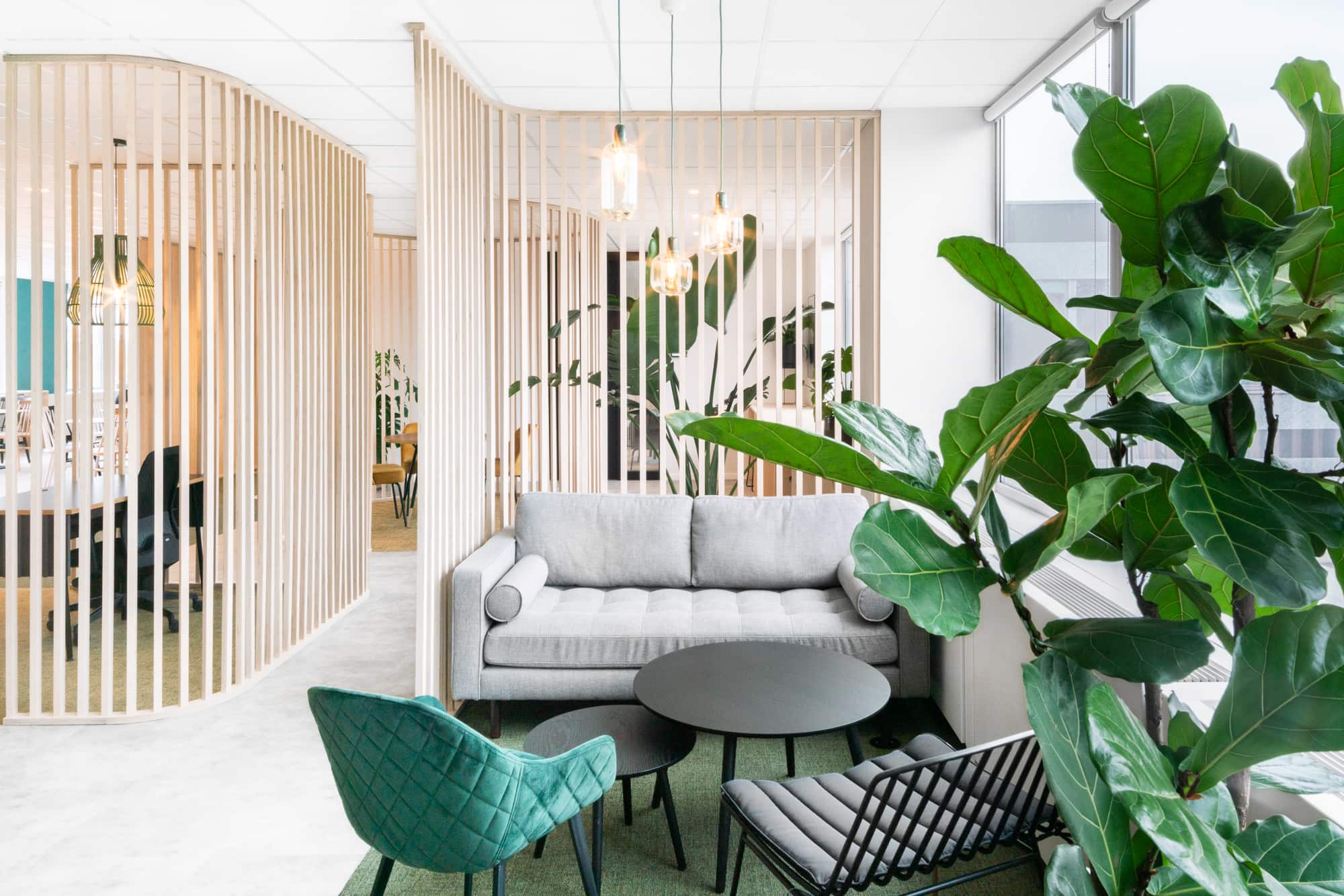
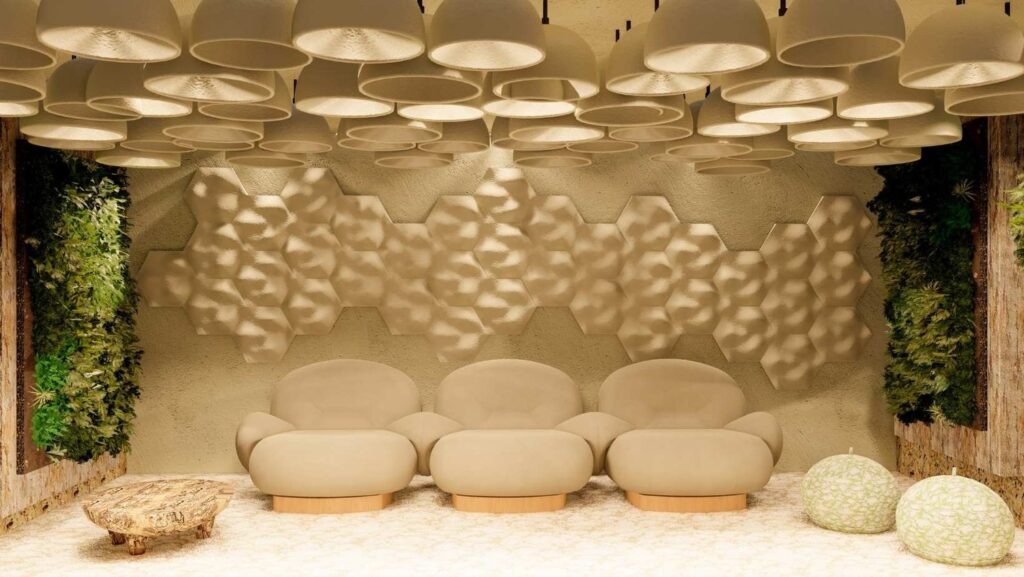
Biophilic Design Elements – we spend most of our lives indoors, but contact with nature and more natural environments is key to our health and wellbeing. Internal environments can benefit from incorporating design elements that promote nature connection through multi-sensorial and restorative sense design [16]. This may include introducing supportive ambient soundscapes within work or study areas that can improve comfort, reduce distraction and increase focus [17],or more non-acoustic elements such as green walls, planting and views of nature from the windows.
This design philosophy has been proven to help overcome challenges in educational, workplace and open space settings, by reducing neurodiverse symptoms and increasing wellbeing, while boosting biodiversity and perpetuating sustainable and environmentally friendly practices.
Quiet & Restorative Spaces – the WELL standard for offices promotes the identification and access of nearby ‘restorative’ areas that allow for rest and contemplation, typically with contact with more natural elements. These may be a short walk from the building or a garden or outdoor area within the building grounds itself. Research shows that spending just 20 mins a day in more tranquil, natural spaces can significantly boost health and wellbeing.
The National Planning Policy Framework in the UK and the European Noise Directive also identifies that tranquil, quiet areas should be identified and protected. These spaces can be especially important for people with atypical hearing as well as developmental disorders, but also just as important for everyone to provide respite and rest from often intense and chaotic urban environments.
Multidisciplinary Design – considering aural diversity is also considering neural diversity. Sound is certainly not the only driver for the experience one has with a certain environment. Lighting, air quality and odour are among other factors that need to be thought of. Therefore, interdisciplinary collaboration and lateral thinking are paramount to addressing the challenges that this group faces.
* * * * * * * * * * * * * * * * * * * * * * * * * * * * * * * * * * * * * * * * * * * * * * * * * * *
[1] Davies, W.J, 2022. Can acoustic design accommodate aural diversity? In: Inter.Noise. University of Salford: Acoustics Research Centre. Available at: https://internoise2022.org/wp-content/uploads/2022/08/Internoise_Proceedings.pdf
[2] Hugill, A., 2022. Aural Diversity: noise control and a sustainable future. In: Inter.Noise. University of Leicester. Available at: https://internoise2022.org/wp-content/uploads/2022/08/Internoise_Proceedings.pdf
[3] Nagib, W., & Williams, A., 2018. Creating Therapeutic landscapes at home: The experiences of families of children with autism, ‘Health and Place, 52’, 46-54. https://doi.org/10.1016/j.healthplace.2018.05.001
[4] Caniato, M., Zaniboni, L., Marzi, A., & Gasparella, A., 2022. Evaluation of the main sensitivity drivers in relation to indoor comfort for individuals with autism spectrum disorder. Part 1: Investigation methodology and general results, ‘Energy Reports, 8’, 1907–1920. https://doi.org/10.1016/j.egyr.2022.01.009
[5] International Organization for Standardization., ‘ISO 226:2003 Acoustics: normal equal loudness level contours’ (2003). Available at: https://www.iso.org/standard/34222.
[7] AURAL_DIVERSITY_INFOGRAPHIC_1v.pdf (auraldiversity.org)
[8] Berglund, B., Lindvall, T., Schwela D.H. Guidelines for Community Noise, World Health Organization, Geneva, 1999. Available at: https://apps.who.int/iris/handle/10665/66217
[9] Drever, J., Cobianchi,M. and Rosa Pérez, C., 2022. Auratypical acoustics? A critical review of acoustical foundations, standards and practices. In: Inter.Noise 2022, Glasgow. Available at: https://internoise2022.org/wp-content/uploads/2022/08/Internoise_Proceedings.pdf
[10] Building Bulleting 93 (BB93). Acoustic design of schools: performance standards. February 2015. Department of Education. Available at: https://assets.publishing.service.gov.uk/government/uploads/system/uploads/attachment_data/file/400784/BB93_February_2015.pdf
[11] BS 8233:2014. Guidance on sound insulation and noise reduction for buildings. February 2014. Available at: https://knowledge.bsigroup.com/products/guidance-on-sound-insulation-and-noise-reduction-for-buildings/standard
[12] ProPG: Planning & Noise. Professional Practice Guidance on Planning & Noise. New Residential Developments. May 2017. Available at: https://www.ioa.org.uk/sites/default/files/14720%20ProPG%20Main%20Document.pdf
[13] BSI Knowledge (ed.) (2022) Design for the mind –Neurodiversity and the built environment – Guide. Available at: https://knowledge.bsigroup.com/products/design-for-the-mind-neurodiversity-and-the-built-environment-guide/standard?utm_source=Pardot&utm_medium=Email&utm_campaign=SM-STAN-LAU-H%26amp%3BS-PAS6463-2207
[14] ISO 12913-1:2014. Acoustics –Soundscape –Part 1: Definition and conceptual framework. September 2014. Available at: https://www.iso.org/standard/52161.html#:~:text=ISO%2012913-1%3A2014
[16] Interface & Oliver Heath Design. Creating positive spaces by designing for cognitive & sensory wellbeing: an accessible practitioner’s guide to inspire Architects & Designers to use Biophilic design to support focused work. Available at: https://info.interface.com/whitepapers-en_GB#Sensory_Wellbeing
Other useful sources:
AuralDiversity Book. Authors: John L. Drever, Andrew Hugill. Editorial: Routledge, Taylor & Francis Group. ISBN: 9781032024998. Available at: https://www.routledge.com/Aural-Diversity/Drever-Hugill/p/book/9781032024998
Authors: Eduardo Manzano Fontecha; Grant Lewis Waters