As the UK accelerates its journey towards net zero, air source heat pumps (ASHPs) have emerged as a key element of decarbonation schemes – especially in built up areas where space availability is limited, meaning ground source heat pumps would not be a viable option.
Our experience shows decarbonisation schemes are being implemented on a wide range of development types, from large existing residential schemes to leisure centres, schools and universities, healthcare facilities, prisons and police stations.
Unlike domestic units, ASHPs which serve large developments often require significantly more powerful systems or multiple units, increasing the potential risk of noise and vibration issues.

THE POLICY PUSH
The UK government has set an ambitious target of 600,000 heat pump installations per year by 2028, supported by schemes like the Boiler Upgrade Scheme, Public Sector Decarbonisation Scheme, and the Heat Pump Ready programme. While much attention is given to domestic residential uptake, large scale residential and non-residential buildings are a critical frontier.
Commercial landlords, local authorities, and developers are under increasing pressure to decarbonise their estates. But as ASHPs scale up in size and number, acoustic performance becomes a key planning and operational concern.
HOW NOISY ARE AIR SOURCE HEAT PUMPS?
For units which serve large decarbonisation schemes, our data from on-site commissioning noise measurements and our review of manufacturers’ noise data show that, in many cases, ASHPs have the potential to generate a sound pressure levels between 70 to 80 dBA at 1m. The overall level can significantly increase if installations of multiple units are required, as might be expected.
If we were to look into installing one of these units on site where the nearest sensitive property was located 20 metres away from the installation, this could result in a sound pressure level of 54 dBA at their windows during the night-time period.
For context, the MCS 020 standard (March 2025) suggests that new domestic ASHP installations should not exceed a sound pressure level of 37 dBA at the nearest neighbouring residential property. Many local authorities within the GLA require even more stringent criteria, which could fall below 30 dBA.
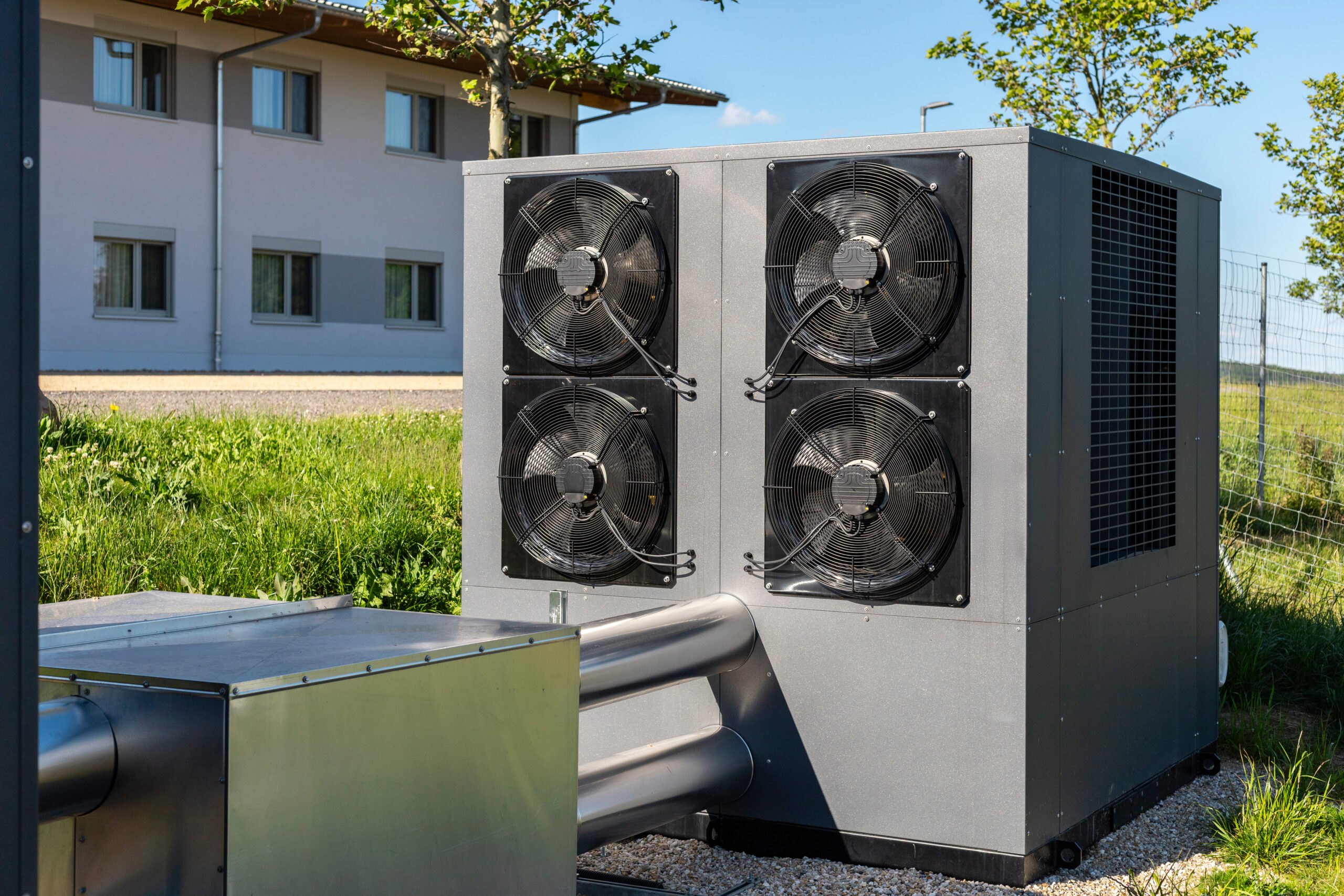
Our experience shows that the following key aspects of ASHP units can cause noise and vibration issues:
- Noise generated by compressors and fans
- Vibration transmission through building structures, particularly lightweight constructions
- Operational cycling during peak hours
- 24-hour operation for healthcare facilities and residential developments
- Significant external ventilation requirements of external ASHP units, resulting in larger acoustic enclosures
- Noise generated by associated emergency power generators
In sensitive environments like schools, healthcare facilities, and mixed-use residential developments, without formal engagement with an acoustic consultant this can lead to complaints, planning delays and planning non-compliances for noise.

HOW CAN I EFFECTIVELY PLAN FOR A NEW ASHP INSTALLATION?
Non-domestic ASHP installations can be subject to strict planning standards due to the fact they do not meet the permitted development requirements of the Government’s small-scale renewable and low carbon energy technologies MCS scheme.
Developers of such installations would generally need to plan for:
- Undertaking a detailed Noise Impact Assessment (NIA) to ensure the Local Authority noise requirements are met
- Incorporate operational time restrictions and/or incorporate physical acoustic mitigation measures
- The potential vibration impact on sensitive areas from such installations, e.g. flats below rooftop units
- Engaging with residents of a residential development at an early stage
It is therefore more important than ever to engage with an acoustic consultant at an early stage to mitigate the risk of costly redesigns and remedial measures.
WHAT MEASURES CAN BE CARRIED OUT TO REDUCE NOISE AND VIBRATION FROM ASHPS?
To ensure ASHPs are both effective and unobtrusive, stakeholders and developers should consider:
- Strategic placement: Away from sensitive receptors such as homes, classrooms or patient rooms
- Acoustic barriers and enclosures: To reduce direct sound propagation
- Vibration isolation: Using anti-vibration mounts and flexible connections
- Smart Building Management System (BMS) controls: Adjusting duties during quiet hours
- Low-noise models: Prioritising units with variable-speed inverters and enhanced casings
- Using detailed 3D computer environmental noise modelling software: To carry out feasibility studies of suitable locations and allow for easy design iterations
EXAMPLE CASE STUDIES
We’re working on several innovative examples of acoustic-conscious ASHP deployment:
Case Study 1 – A large decarbonisation scheme of a council owned residential development in London constructed in the 1970s
We have been appointed to explore feasible locations of ASHPs and a new energy centre with respect to noise and vibration. The various location options included:
- Roof mounted evaporator units located on one of the tower blocks which connects to a standalone energy centre located on the ground
- Two potential locations for a large 3-storey standalone energy centres with roof-mounted ASHP evaporator units
As part of our current appointment, we have:
- Undertaken a site-walkover with the design team to explore these locations so we could highlight the potential risks and opportunities of each
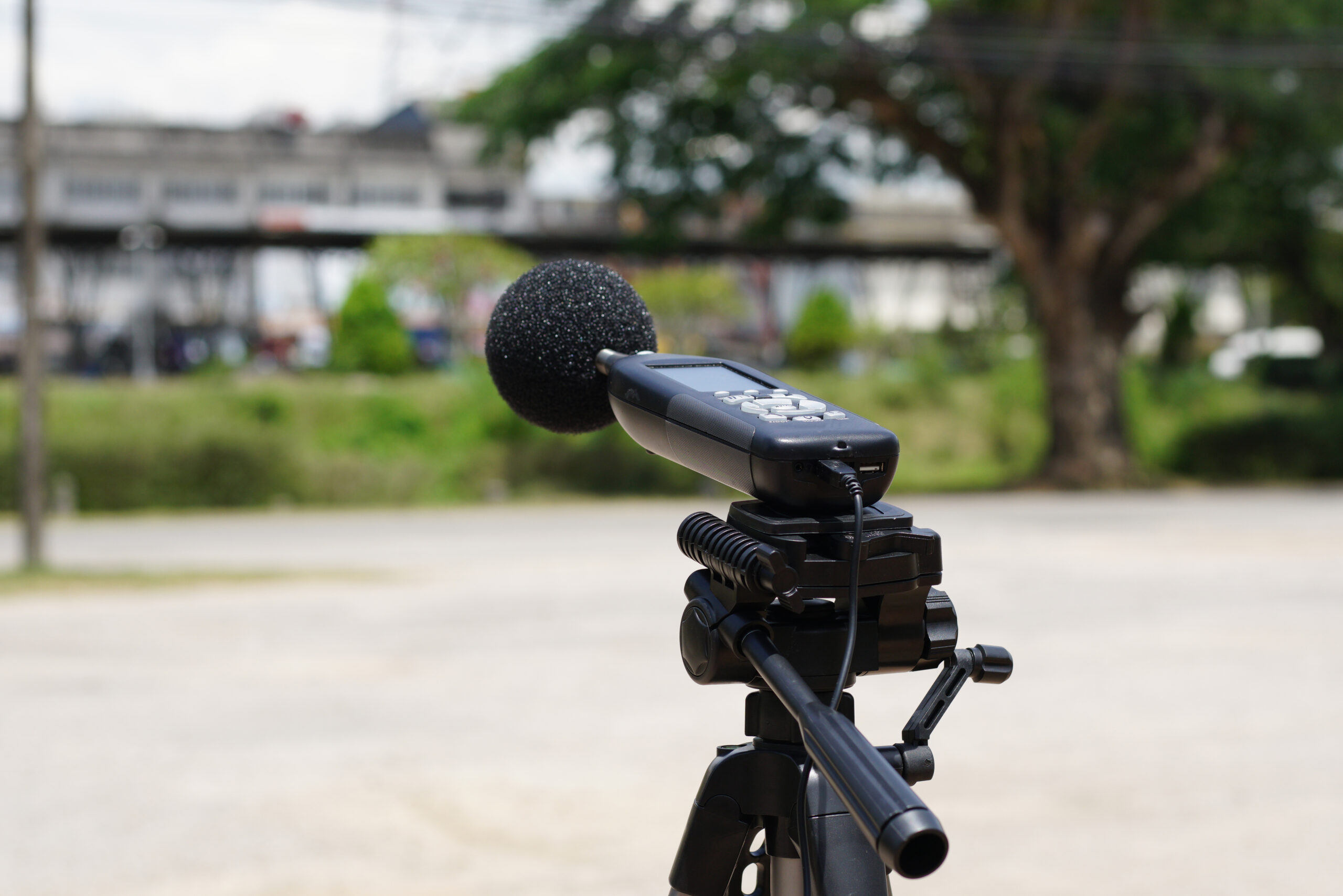
- Carried out a detailed site-wide unattended noise survey
- Constructed a large 3D environmental noise model of the site and surrounding areas
- Identified a suitable location for the energy centre which should negate the need for extensive costly specialist acoustic enclosures and anti-vibration measures, whilst still ensuring the needs of other disciplines are met
Case Study 2 – The decarbonisation of a police station in London located adjacent to residential properties
We have recently completed the acoustic design of a decarbonisation scheme for a police station which required 6No. rooftop ASHPs as well as an emergency generator and new substation. As part of our input, we were able to:
- Specify acoustic performance requirements for each side of the rooftop ASHP louvred enclosure – which has been optimized to ensure no elements of it are overdesigned
- Incorporate existing boundary acoustic screening in our noise model
- Specify in-duct performance requirements for the exhaust attenuators of the emergency generator
- Carry out the detailed noise impact assessment to accompany the planning application for the scheme
Case Study 3 – A decarbonisation scheme for a school in South London
We were requested to undertake a planning noise impact assessment for a school decarbonisation scheme in South London, which required 2No. large ASHP units located in a quiet area, within the vicinity of residential properties (15 metre distance).
As part of our appointment, we were able to:
- Undertake a detailed unattended noise survey on the site which would be used to set the plant noise criteria, based on the requirements of the Local Authority (5dB below the prevailing background sound level)
- Provide a specification for a low-cost acoustic screen which surrounded the units. This included specifying the height, the provision of absorbent lining to the inside, and the extent of the barrier
- Issue a noise impact assessment report suitable for accompanying the planning application.
OUR FINAL THOUGHTS
As we retrofit and build for a net-zero future, it is important that acoustic considerations are embedded early in the design process, not just to meet regulations and statutory requirements, but to ensure occupant comfort, community acceptance, and long-term success. More and more research is emerging which shows that noise can have a detrimental effect on long-term health and well-being, therefore it is more important than ever to ensure it is considered.