The Challenge
Our cities are polluted. It’s not only air pollution that is detrimental to human health, but also our sound environment, or soundscape. We can all recall how we feel in a typical busy street: the thick taste of fumes, the constant rumble of road traffic, the violent burst of sound caused by a passing motorbike, our feet hurrying us to reach our destination. The dominance of noise from the internal combustion engine affects us every day. Over 100 million people in Europe alone are exposed to daily road traffic noise levels above the recommended threshold of the World Health Organisation’s noise guidelines. Noise levels above this threshold are linked to increased physiological risks, such as cardiovascular diseases, and psychological impacts, such as stress, sleep disturbance and the resulting wellbeing and mental health impacts.
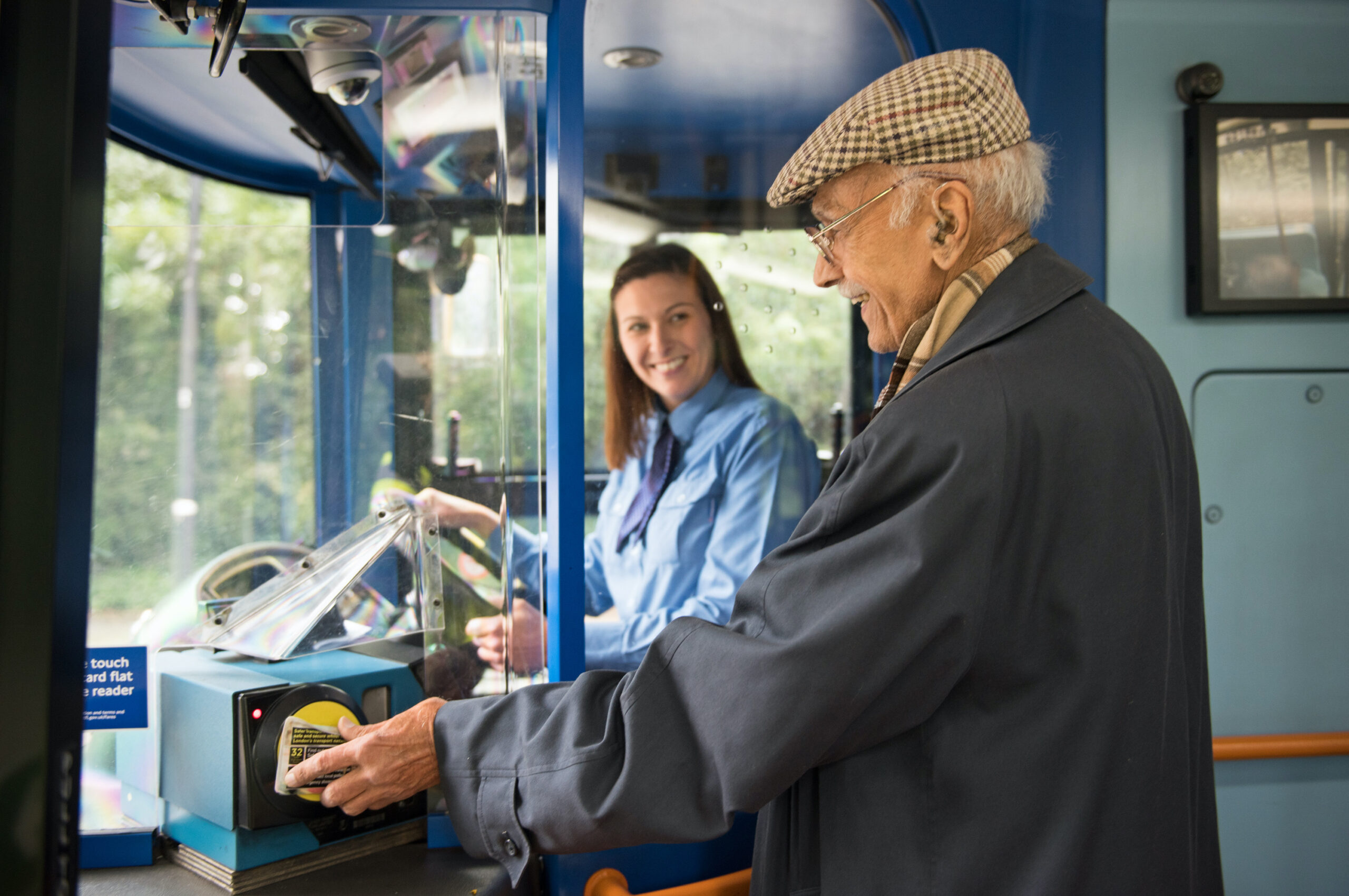
Ultimately, it’s the quality of our urban environments that help promote healthier ways of living: walking, cycling, public transport, healthier places, and spaces. Electric vehicles are this future. More appropriately, a fully electric bus fleet is this future. 6 million people use London buses every day. Clean air, greener energy, more walkable streets, and less noise. The result is that the future city environment, and its soundscape, are drastically improved, our journeys become more enjoyable, and we can breathe again.
But electric motor vehicles are “silent” in comparison to the noise caused by the Internal Combustion Engine, they’re often more formally termed “quiet-running” vehicles, and people are used to hearing an engine to alert of a potential risk of collision. Tyre noise is only sufficient to draw attention to a moving vehicle above 20 km/h (12 mph). This means there is an increased risk of collision, particularly for vulnerable road users at slower speeds.
To address this problem, the United Nations ECE Regulation 138 requires that all quiet-running vehicles must introduce what is called an Acoustic Vehicle Alerting System or AVAS, to alert vulnerable road users of the risk of collision. This is of particular importance with a large vehicle such as a bus.
The Transport for London (TfL) Bus Safety Standard sets out their plan for bus safety to go beyond even TfL’s overarching Vision Zero target – “no one killed in, or by, a London bus by 2030”. Part of their plan involves ensuring “acoustic conspicuity” in line with incoming regulation and adopting this sooner than is required by law. TfL’s vision was to create an “Urban Bus Sound” that could be used across their entire fleet, to be instantly recognisable as a bus to any road user, avoiding the confusing situation where each bus manufacturer would use their own AVAS sound, which arguably could even further increase the risk of collision.
Now, the challenge of this project wasn’t “do we transition to an electric bus fleet?” or “do we install AVAS?”; it was how do we transition towards an AVAS sound that balances the requirements of alerting road user’s attention without missing the opportunity to dramatically improve the soundscape of our cities away from the dominance of the combustion engine? How do we alert of a threat using sound, without it resulting in an increase in stress hormones that are caused by our responses to noise?
Finding this balance, which will affect all of our lives in cities, and developing a practical and appropriate way to achieve it, was our role to play in this project. Anderson Acoustics were appointed to provide Assurance on the project, overseeing how the delivery of the project was achieving TfL’s aspirations, being TfL’s ‘expert ears’ essentially, to ensure the best quality sound outcome possible as well as being considerate of its impact on the London soundscape, implementation and compliance with UN ECE Regulation 138, and the approach to gaining stakeholder and public acceptance of the sound.
A Creative & Soundscape Approach
Initial SonicRoom Demonstration – Subjectivity of Sound and Public Adoption
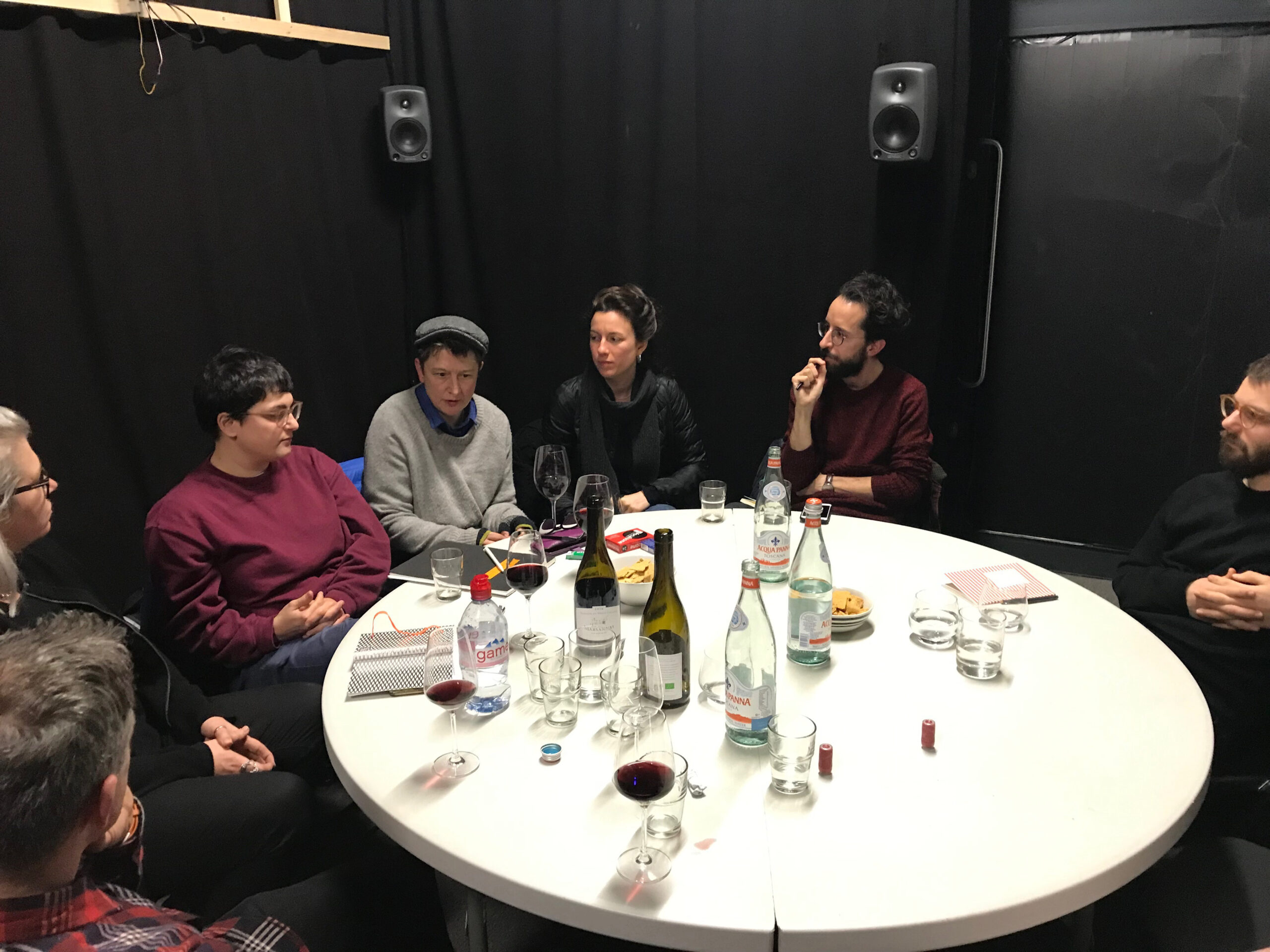
Anderson Acoustics began the discussion with the TfL AVAS team, then being formed, by presenting the context of this challenge in a SonicRoom demonstration on an example street in Elephant & Castle in late 2018.
We presented the changing sound environment of the streets of London compared to now, reduced road vehicles (as predictions suggest), quiet-running buses, more walking, cycling and healthier streets. We then superimposed the sounds of current AVAS on the market, particularly the Renault ZOE, amongst others.
We then discussed how each of us accepted the sound, it’s positives and negatives, our preferences. This demonstrated the inherent complexity of how we all respond to sound, each of the group feeling differently towards to each sound, bringing our own context and preferences. It also highlighted the challenge of how this will be scaled to a city-wide discussion on how an appropriate ‘Urban Bus Sound’ will be developed to complement the future of the city. The discussion resulted in the team understanding the fundamental importance of public engagement in the project, for the initial design and composition process, and more significantly the public adoption process as it is rolled out on all 9,000 buses on the streets of London.
Working Collaboratively for Complementary Expertise
Anderson Acoustics has many talented acoustic consultants, engagement experts and people-persons. Some of the team even have a background in music and sound design. However, we understand where our expertise ends and when we need to partner to meet the needs of the client.
Composition and sonic branding were extremely important for creating the TfL AVAS Urban Bus Sound, so we went out and spoke to a range of sound designers, artists and composers, eventually meeting Matt Wilcock of Zelig Sound. Most of the people we spoke to were extremely excited about the opportunity to create a sound that will be such a big part of the future of London, but Matt was most unphased by the huge uncertainty of the project and how we would achieve consensus on a suitable sound, likely because of his experience with working with large Clients such as Microsoft, Nike and Apple.
We discussed his typical creative process and thoroughly combined it into our own process of public and stakeholder engagement, acoustic analysis and psychoacoustic testing that we were developing for this project. Anderson Acoustics adopts an agile approach to soundscape design. We work with the client to fully understand both their explicit and tacit requirements early in the process, often through brainstorming and rapid assessment of creative ideas and options. Implementation is built on a foundation of public engagement workshops and interdisciplinary co-creation activities to achieve in a sound that had the public on board. Partnership, not consultation, with the public and key stakeholders was the central philosophy.
What does an ‘Urban Bus’ sound like?
Defining and Expanding the Creative Brief
Anderson Acoustics and Zelig Sound led a workshop with the TfL project team in July 2019 to capture TfL’s vision for the project, explore and expand on the sonic possibilities, and identify key stakeholders to focus the public engagement on. The workshop involved AECOM who were part of the project team providing project management, initial compositions, acoustic modelling and monitoring and engagement consultancy.
We set out a collaborative approach which began with envisioning what the AVAS Urban Bus Sound really could sound like. We started with the top-level brief “To creative an AVAS London bus sound that is synonymous with TfL’s brand position and values whilst at the same time adhering to emerging safety regulations. It’s says future London, our heritage, our future, our city.” We soon established that London wasn’t to be the focal point of this sound, as it had to be ‘urban’ in general, translatable to other cities ensuring that anyone anywhere would recognise it as a bus. But it was important to expand on what this brief meant from different angles, including “Creative”, “City Soundscape”, “Branding” and “Technical”.
The discussion flowed, digging deeper into how we all interpreted the key brief descriptors. For example, the “Branding” key descriptors included “Safe for all”, “Environmental hope (clean air)”, “future-proof (sustainable)” the “Creative” descriptors included “inspiring”, “harmonious” and “emotional”.
Soundscape Considerations
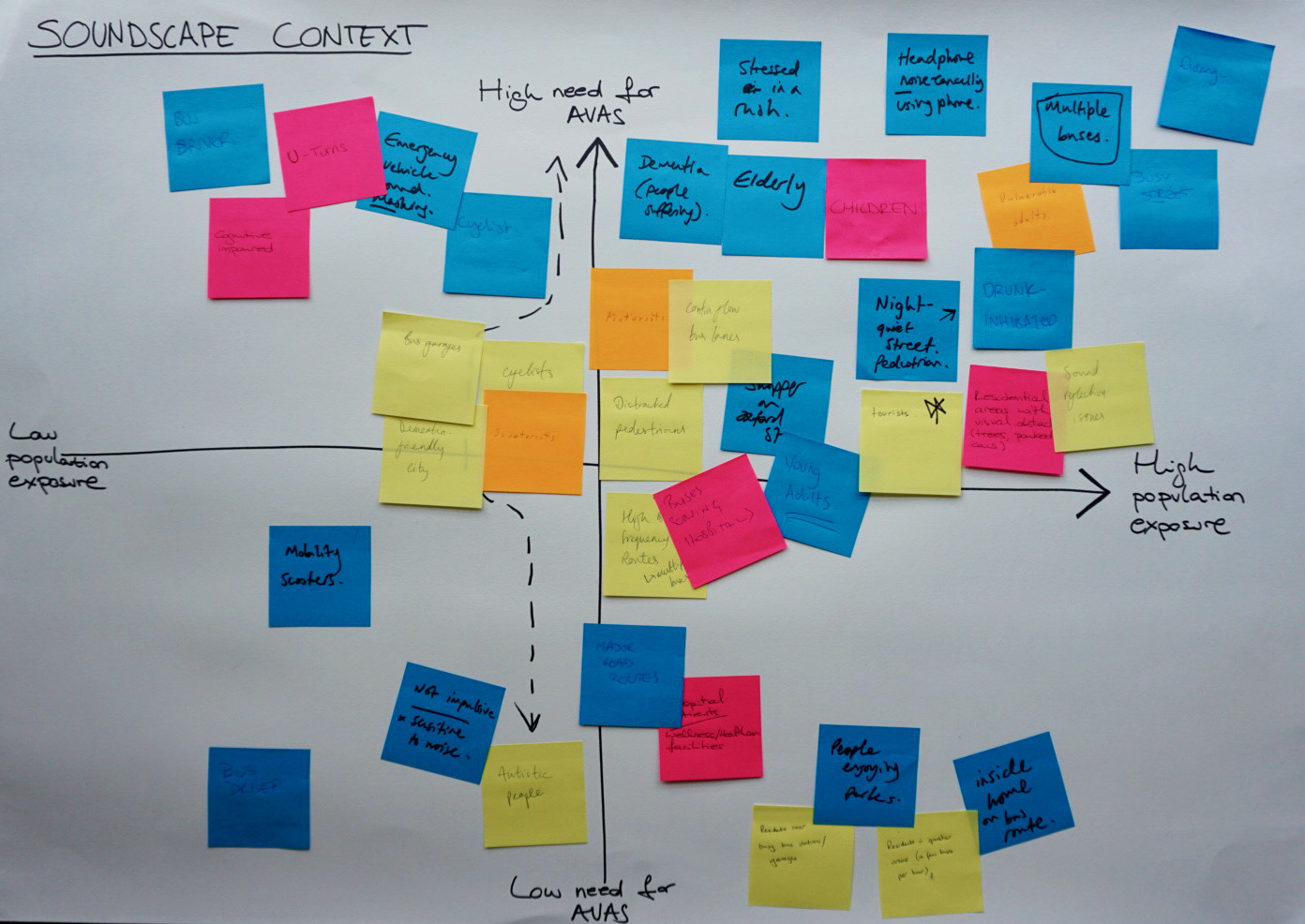
During the workshop, we expanded specifically on the needs of the Urban Bus Sound on the urban soundscape. Our unique approach was to focus on mapping the spectrum of scenarios in which the people of London will experience the Urban Bus Sound. This dual axis spectrum included: common to less-common scenarios against whether the people in those scenarios either had a “high need for AVAS” or a “low need for AVAS”. This is important, as when plotting various scenarios out in this way, we were able to better understand the extremes, those scenarios with high need for AVAS, meaning that it must be acoustically conspicuous, and those that had low need for AVAS, meaning that it’s best to not be audible, such as people sitting in their living room located on a bus route. During the workshop, the project team came to the consensus that the best way to ensure the sound is acceptable for as many scenarios as possible is to test to these extremes, ensuring that those in most need, or those who may potentially have the most negative reactions to the sound are the centre point of how we assess whether the sound is suitable or not. This approach wasn’t the easiest, but it was important to rigorously test, critique and refine the sound sufficiently and this approach directed the subsequent engagement activities to follow.
Part of the project was to acoustically model and demonstrate the sound options to stakeholders to receive feedback and refine them based on their needs and considerations. However, the scenarios in which they are modelled were key to engaging the stakeholders and placing them in specific contexts that challenged to think deeply about how they react to the sounds. It was decided that simulations should focus on bus garages, bus stops in busy areas with multiple buses, and bus stops in quiet residential areas. Additionally, bus driver cabin sound impact was to be an important consideration.
‘Musts’, ‘Nice-to-haves’ and ‘To be Investigated’
To finalise the creative brief, we had to confirm the technical requirements of the sound and the system. This enabled the project team to review if the deliverables met the expectations and requirements of the client, the essence of the assurance process. It was clear which elements were considered necessary to the project, such as the sound being compliant and tested to UN ECE Regulation 138 requirements and having a stationary element when the vehicle isn’t moving (which is not required by Reg 138). The ‘nice-to-haves’ included creating a ‘familiar’ bus sound, a ‘departing’ alerting element and avoiding ‘weak points’ in the sound spectrum (meaning that a generally broadband sound is best in the acoustic environment).
Items noted for ‘further discussion’ included a fading out of the sound above the UN ECE Regulation 138 upper speed limit and the possibility of the sound level output of the AVAS to be adjusted depending on the surrounding acoustic environment to avoid it being too quiet in busy areas and too loud in quiet residential streets. This last point demonstrated how the team was now considering how the sound would operate in the field and its impact on the London soundscape, envisioning how to overcome challenges of public acceptability and annoyance due to contextual considerations.
Sonic Mood Boarding – Audit of Landscape
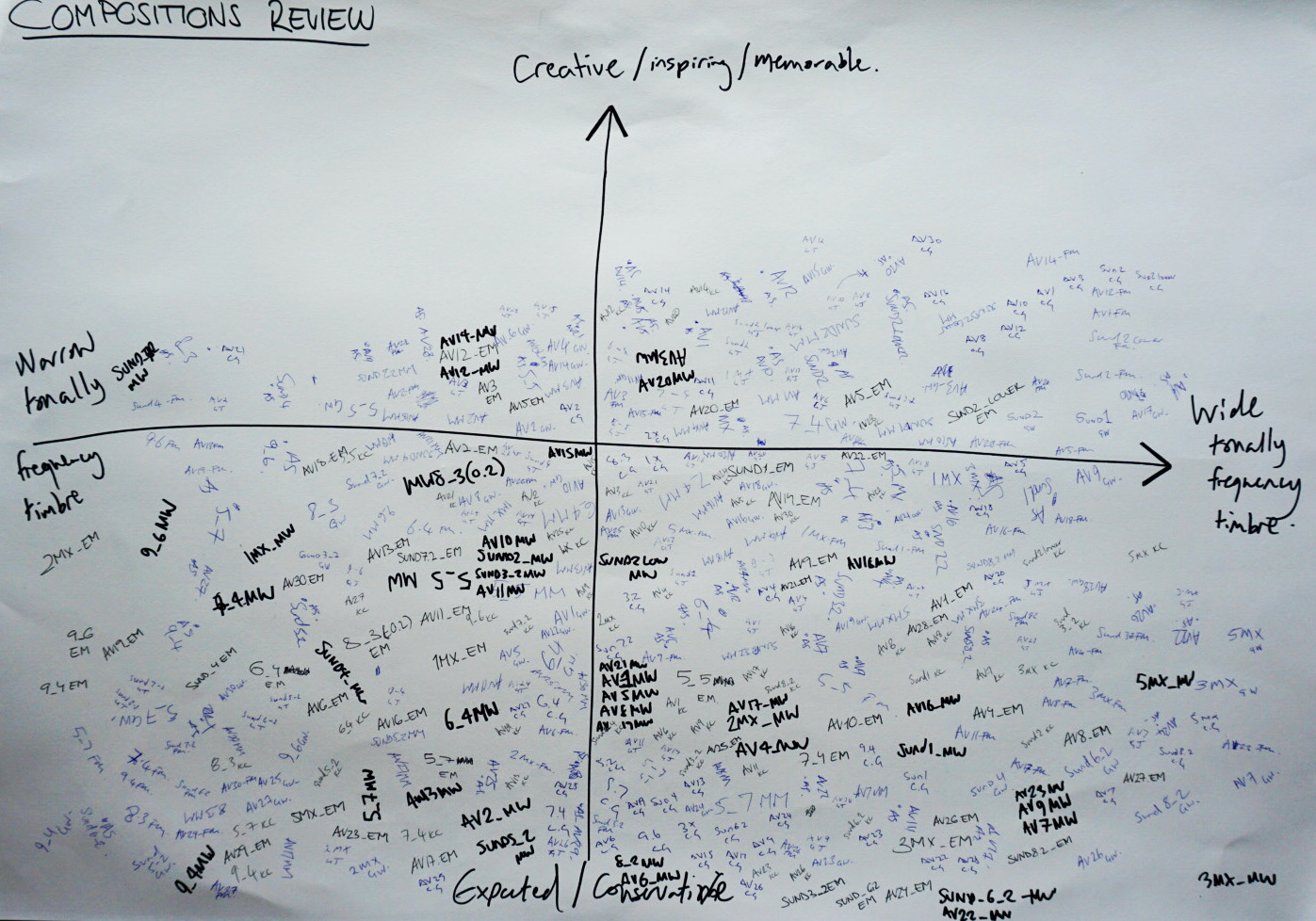
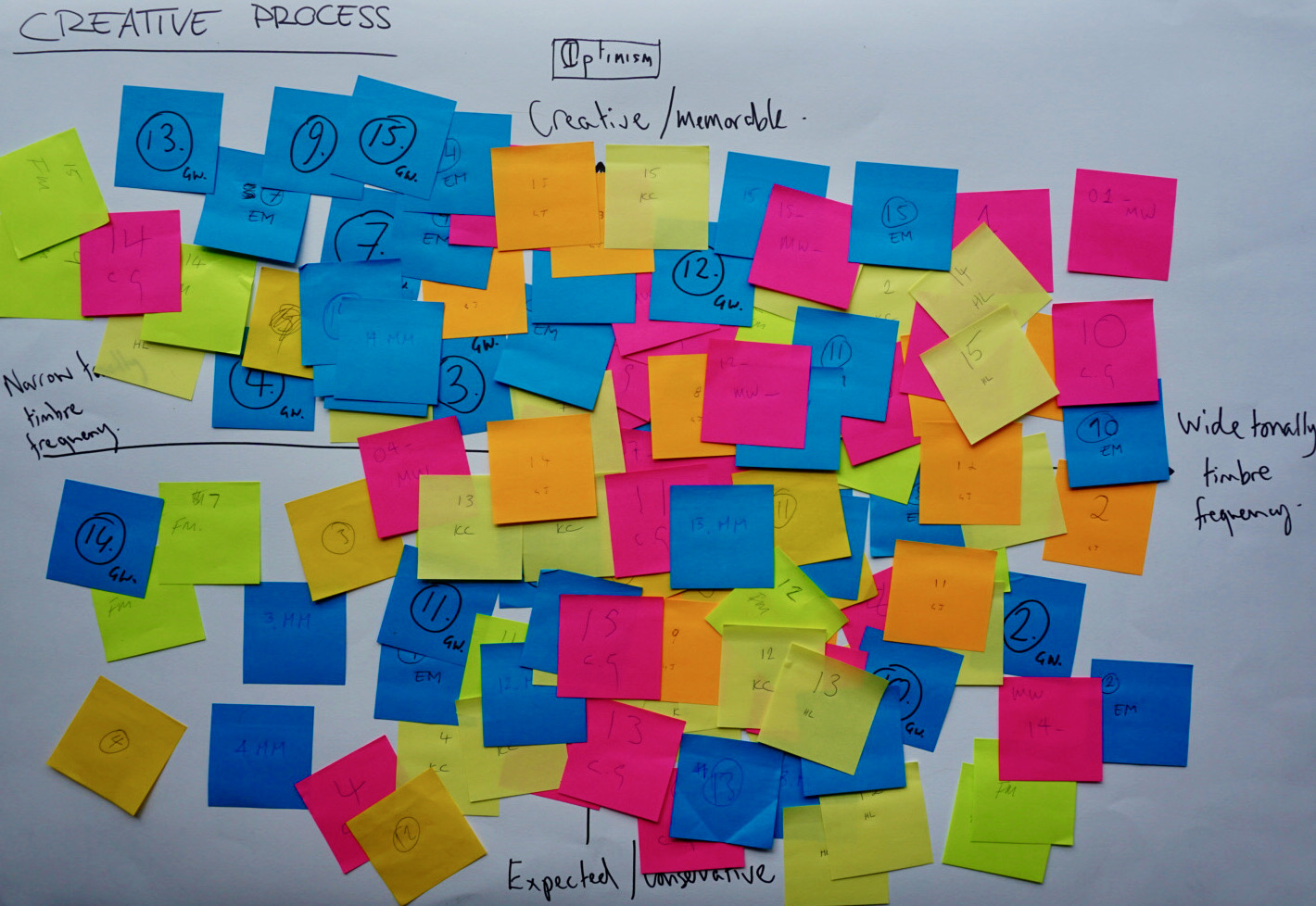
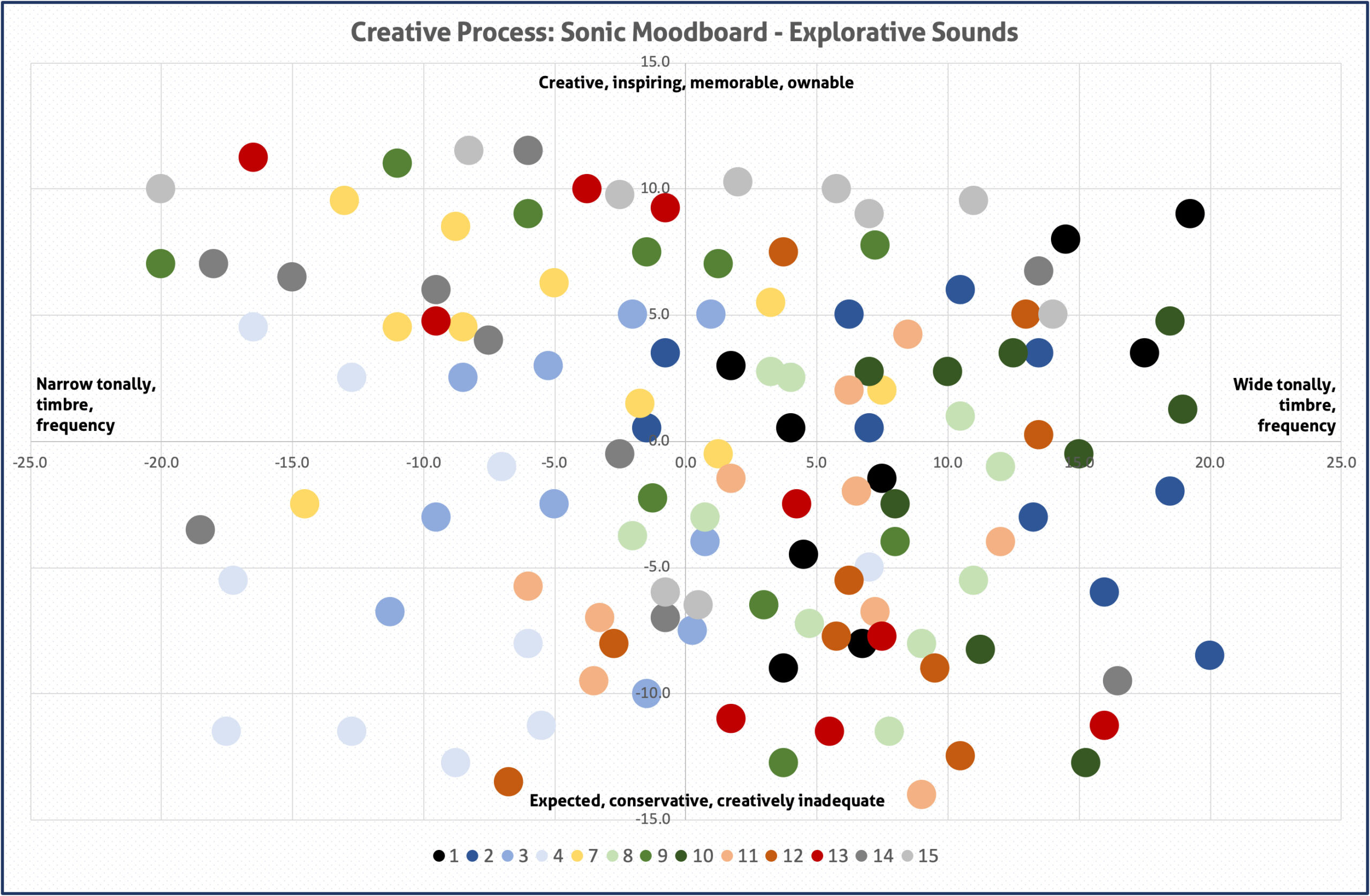
It was important to instil a process of assessing sounds to the expanded TfL creative brief, to better critique sound options and ideas, and to direct towards a sound that is suitable and meets aspirations. Anderson Acoustics conducted research into the existing AVAS sounds in the market so that as a project team we could understand our attitudes and preferences and critique these against our own brief. Those tested were the AVAS sounds from the Renault Zoe (Pure, Glam and Sport options), Nissan Canto, Lotus Halosonic, Jaguar I-Pace, Citroen AMI One, Audio E-Tron, from a notable Ted Talk on the subject and BMW (composed by Hans Zimmer!). This process got the project team really thinking about and describing what they preferred and didn’t prefer about the sounds, as well as articulating why they felt that way. The Sonic mood board exploration can be seen in the pictures below.
Stakeholder Engagement
The stakeholder workshops were not only critical in managing expectations, but also generated useful insights to the suitability and acceptability of sounds. The stakeholders had to acknowledge and understand the challenge that quiet-running vehicles presented to TfL, their Vision Zero target, and how they would contribute to a safer, cleaner, more sustainable city.
Our approach described in this project team workshop and subsequent meetings shaped the next stages of stakeholder engagement towards a narrative that was easily understood yet described the challenge intricately, that meaningfully involved the stakeholders in an open discussion, free for them to explore their views and insights with our support and help shape the sound. We as a team had to really listen to the participants, their concerns and unique insights into how this sound will affect their lives. It was also important to encourage the expression of emotions towards the sound, so we focussed the questions on this, asking “how does it make you feel?” which then allowed us to more deeply explore why that sound had the either positive or negative effect on that person.
Prior to the workshops, the project team rated hundreds of sound options against the expanded brief and selected just five sounds to present during the workshops. The workshops were specifically focussed on our highlighted ‘extreme’ scenarios, inviting representatives and individuals from vision-impaired groups, autism groups, cycling groups, bus operators and staff, to ensure we were not making it easy for ourselves to pass a sound. The participants were then presented with the five sounds in a random order to avoid sequence bias, played in acoustically modelled scenarios of busy high street with multiple buses, quiet residential street at a bus stop and in a bus garage with multiple buses.
The stakeholder workshops were well received, and the feedback was generally positive, with participants expressing how they felt listened to and more involved in the conversation. There were some really helpful insights which helped shape the future iterations of the sound significantly:
• Disabled groups, particularly the vision-impaired should be the primary focus for the sound suitability. They require an impulsive sound to be more dominant to stand out above the ambient sound, and for hazard-localisation.
• Pedestrians with headphones and/or who are looking at their phones require a more impulsive high frequency sound to alert attention.
• Drone like sounds should be “broken up” to avoid blurring of multiple buses together.
• The majority of participants welcomed the idea of listening to existing AVAS sounds by other manufacturers to compare with the Urban Bus Sound options.
• The simulations presented challenges in effectively placing the sound on a bus, where some participants found it difficult to put themselves in context and believe it was a bus sound.
• An “idle” sound component was important to stakeholders in order to give people lead time to notice the sound as it departs.
• Automatic dynamic loudness of the AVAS was suggested to avoid noise pollution on quiet roads and to ensure sound was audible on busy roads.
• Inviting stakeholder representatives, such as vision-impaired groups, into the Zelig Sound Studio was agreed to be beneficial to refine the sounds and to take into account the opinions of those with the most need for AVAS.
The input from stakeholders greatly directed the next stages of the project, where a project team decision was made to hold further engagement activities to refine and critique sound options, including in-studio sessions with vision-impaired group representatives as well as moving towards ‘field’ test engagement sessions, where the sound was to be installed on an actual quiet-running bus in real London streets to alleviate simulation concerns.
In-Studio Engagement Sessions
The feedback from numerous stakeholders was to invite key accessibility groups into the Zelig Sound studio to directly involve them in refining the sound and help them understand challenges involved. This had a humbling effect on the stakeholders, where they were challenged to think practically about the requests and comments they were making, as changes were made in real-time. This process, repeated with multiple vision-impaired group representatives, enabled the development of the “beacon” element, which provided an impulsive character to aid localisation and a sense of movement. This felt like that real breakthrough, as this type of sound was beyond what any of us in the project team were expecting. It was a direct result of listening to the voices, opinions and needs of the stakeholders. The “beacon” element made localisation easier due to people being able to hear reflected sound from nearby surfaces and the narrower band impulse was more audible in busy urban environments without excessive amplitude. Along with the “beacon” element came the “idle” underlying sound, helpful to identify when a vehicle is at rest, further responding to the stakeholders’ comments.
Each of the five sound options were completely redesigned with their own impulsive and idling elements in direct response to the stakeholder workshops and the in-studio sessions. These were the sounds that would be now placed on a real electric bus to gain more accurate responses from the stakeholders in context.
How does it sound in context?
Field Trials
Once TfL had received the feedback of the stakeholder engagements using simulations and the in-studio sessions, it was apparent that for our key stakeholders (people representing vision impaired and accessibility groups) to provide their true critique and eventual approval of one of the sound options, they had to experience the sound on a real bus in London.
The system on which the sounds were to be played had to be prototyped, increasing in frequency with increasing speed, operating while in idle mode and fading out above 20 km/h. Additionally, it was key that the speaker had sufficient frequency, amplitude and distribution response to adequately reproduce the sound options. Due to many AVAS systems on the market being based on voice alarm systems, the speaker quality and frequency response was not suited to high-fidelity sound content, focussing instead on mid-range frequencies. If not resolved, this would represent the sound options incorrectly and may result in negative stakeholder response.
The five sounds selected were those redesigned following the most recent stakeholder engagement workshops to include a “beacon” impulsive element that allowed more effective localisation and was audible across greater distances without the need for higher amplitudes. This required to split all sound options into two layers, one for the “beacon” and one for the “idle” or “stationary” sound. The implication being that when the bus was stationary with engine on, only the “idle” sound would play, but when it departs, both the “idle” and the “beacon” sound would be enabled, indicating to road users that the bus was in motion. The stationary, but ready to move, sound was key for the stakeholders to understand if a bus was about to depart or was there without the motor on. Anderson Acoustics and Zelig Sound produced an advice document on the terminology of these elements to ensure that the language used during the stakeholder workshops was consistent and could be correctly interpreted across the project team, as well as the stakeholders themselves.
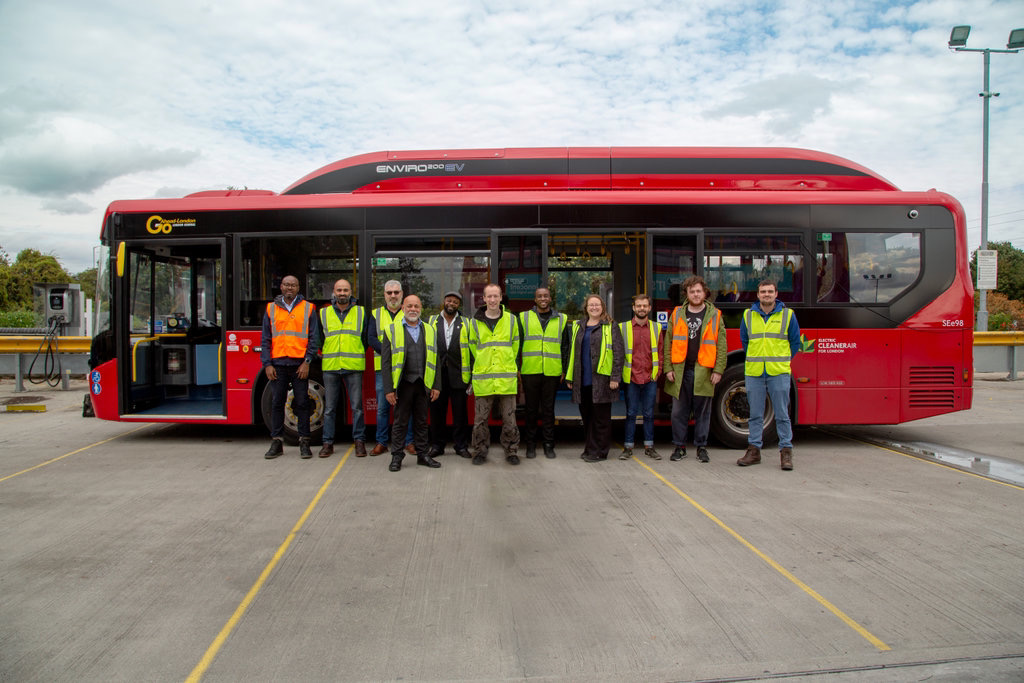
ADL and Foreman were selected to trial a new AVAS system, as they were already producing the systems for the new TfL Electric Bus fleet. For the trials, TfL and ADL arranged for the team to have access to a single decker fully electric and a hybrid double decker bus at the garage in Northumberland Park.
Technologically, splitting up the sounds into “idle” and “beacon” components meant that it was a challenge for Foreman to integrate this capability, as their systems were only programmed for one audio file. They quickly responded to this, initially programming multiple files to be switched based on a switch box, for the purpose of the trials. The initial speakers that were integrated were of narrow frequency spectrum such that the quality of the sound reproduction was less than ideal, but it enabled us to test the effectiveness of the sound itself, how it changed with increasing speed, the effectiveness of the “idle” and “beacon” sounds, the fade out above 20 km/h, as well as the placement of the speakers and their directivity when behind the front panel of the bus.
It was arranged for speakers with a broader frequency response to be installed. With the new speakers fitted, the sound was able to be reproduced more accurately and acoustic measurements were taken to objectively rate the performance in line with UN ECE Regulation 138. Speakers were fitted to the front and rear of the bus to ensure good sound distribution and measurements were taken to the side (front and rear) of the bus when in motion at 10 km/h and 20 km/h. Measurements were also taken inside the drivers cabin to understand how much insulation may be needed to achieve acceptable levels inside.
It was important to test stakeholder’s views on the sound options in both quiet street and busy streets, with single and multiple buses. The stakeholders could finally experience the sound in real-world operation. It was clear when talking with the participants which sounds appeared to be most preferable, but also how each of their priorities were different. A representative from a cycling group was most interested in how far the sound travelled, alerting cyclists of the presence of the bus, so he walked a long way down the road to see at which point he was able to no longer hear the AVAS sound. The “beacon” sound was shown to be a key element in audibility at longer distances without excessive amplitude. Additionally, the scenario with multiple buses parked together meant that the sound output from the front vehicle’s rear speakers and the rear vehicle’s front speakers were causing interference which was confusing to vision impaired stakeholders, making it difficult for them to identify the location and number of the buses.
Final Selection
The second round of stakeholder field trials were focussed on selecting the most preferred sound option to provide an independent stakeholder-endorsed proposal for TfL.
The field trials resulted in an almost unanimous preference for the finally selected sound option, with its underlying “idle” sound that churned like an engine and soothing “beacon” component.
Hardware & Software Development
System Integration and Compliance Testing
Further work was needed to complete the system integration and prepare the implementation for UN ECE Regulation 138 compliance testing.
The AVAS Urban Bus Sound was packaged in a way it could be smoothly reproduced by ADL and Foreman’s systems.
The integration and testing work also included future-proofing the system, and it’s UN ECE Regulation Compliance, for additional functionality that will allow the AVAS Urban Bus Sound to adapt to real-time noise environments. Anderson Acoustics advised ADL and Foreman on upper and lower sound level limits which would ensure future UN ECE compliance for any system updates supporting dynamic adaptive sound level.
The system passed an independent UN ECE Regulation 138 Compliance test. After 6 months of collaborative work, the solution could finally be presented for approval by TfL management and City Hall.
Next Steps
We have been continuing our work on Phase 2 of the project supporting TfL soundscape considerations, stakeholder engagement approach and implementation of the Urban Bus Sound routes across London.
Key Learning
Soundscapes can shape our cities for the better. By investing time early in the project to understand TfL’s requirements and aspirations, and by using the SonicRoomTM to facilitate an experiential conversation on soundscape, the project was reframed as an opportunity to create a better future through improving the city soundscape rather than simply mitigating another form of bus noise.
Our focus on delivering client value manifested itself in a collaborative approach working with experts in their own fields – sound designers, other acousticians, electronics manufacturers, and stakeholder activists. The client outcome through partnership far exceeded what could have been achieved by a single supplier.
The role of Assurance Provider, an expert advocate for the interests of the client saw the team act as a trusted facilitator for all stakeholders. We created a project culture of true dialogue, where people can critique without judgement, and we believe this was fundamental to the creation of the successful Urban Bus Sound.
Anderson Acoustics are recognised leaders in communicating and engaging with communities on noise, sound quality and soundscape. The commitment to public engagement, true dialogue, transparency and iterative development based on stakeholder feedback underpinned the success of the project.
We are proud of the new Urban Bus Sound and the positive feedback we received from stakeholders. It will make our streets safer and calmer, and our cities more pleasant places to live.