
It is regularly quoted that padel is one of the fastest growing sports in the UK. Figures released by the Lawn Tennis Association in March 2026 showed that the number of active participants at the end of 2025 had doubled over the previous year to 860,000. Over the same period, the number of courts increased from 870 to 1,553.
This increased participation and visibility inevitably bring greater scrutiny of environmental impacts, particularly noise.
Local residents, Environmental Health Officers, developers, planning consultants and acoustic consultants are now regularly having to address the potential impacts associated with new padel court developments.
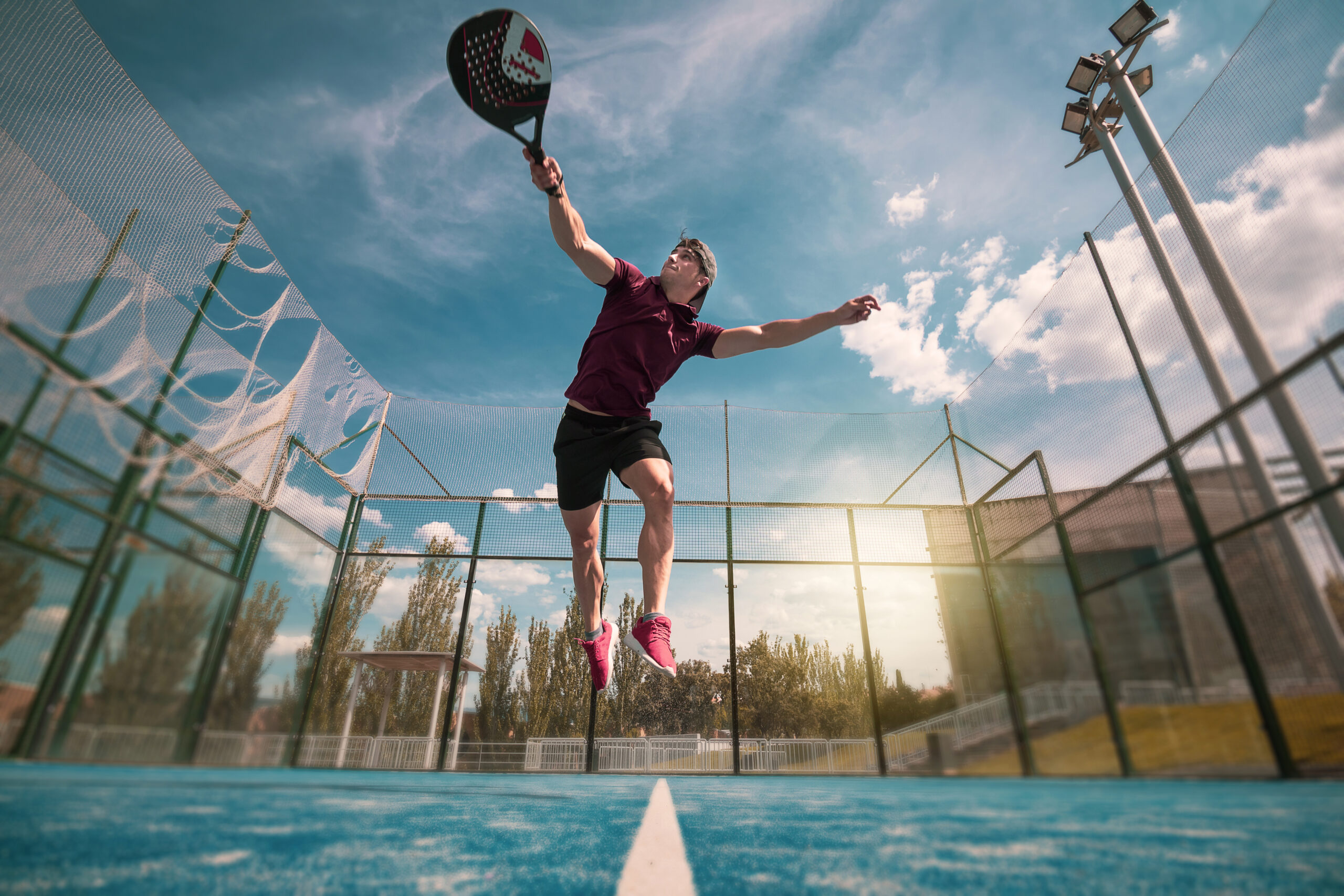
While there are many similarities with tennis in terms of the rules and style of play, the acoustic signature of padel is notably different. As with tennis, the dominant noise sources are player voices and ball strikes; however, that is largely where the similarities end.
- Firstly, a ball striking the hard composite face of a padel racket produces a sharper and more impulsive sound than that associated with a conventional tennis racket. Even where measured sound pressure levels may be comparable, the subjective perception of padel noise can often be greater;
- Secondly, padel typically involves longer rallies on smaller courts, meaning the frequency of ball strikes over a given period can be almost double that of a tennis match;
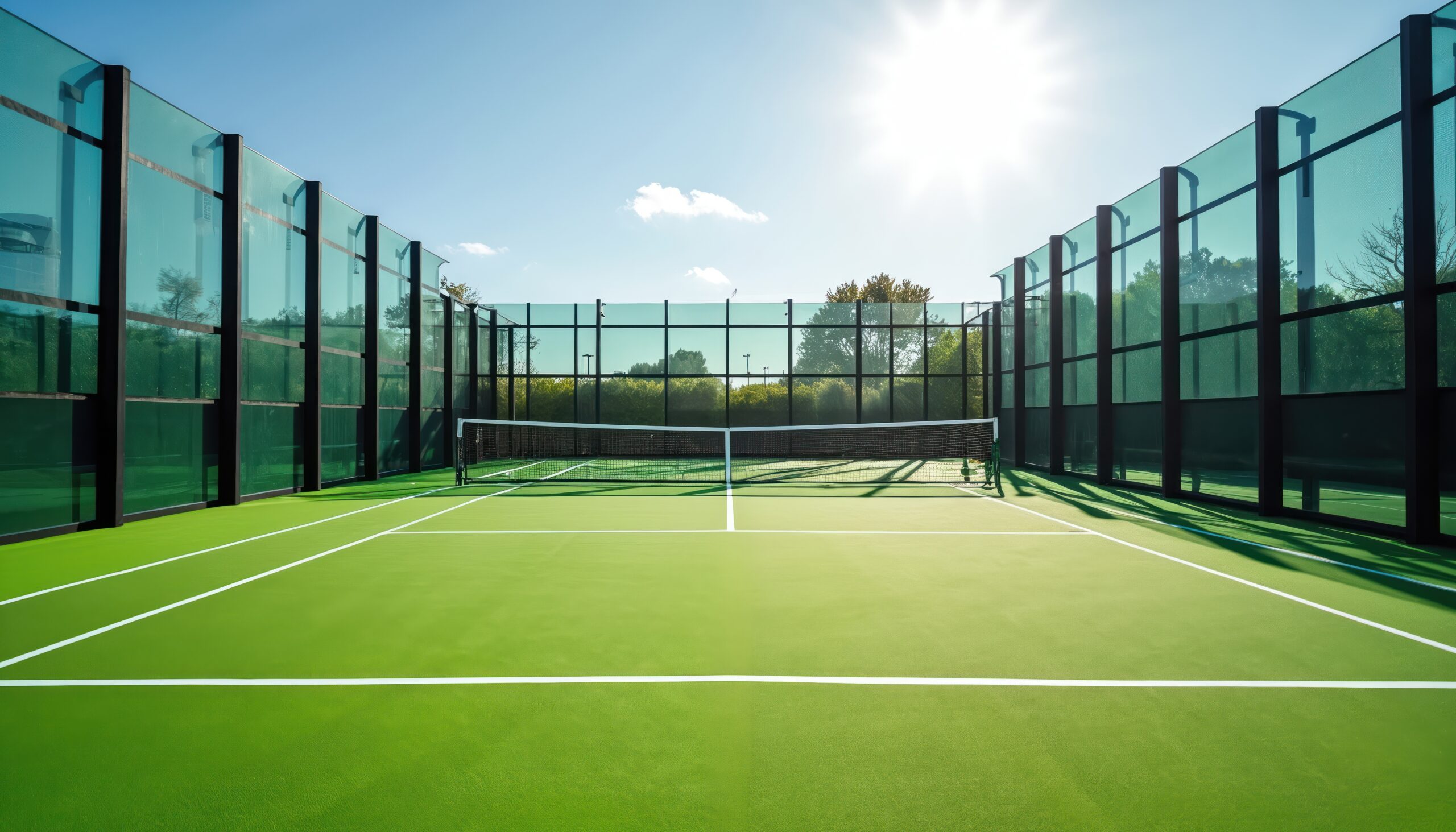
- Thirdly, because padel courts are enclosed with solid (usually transparent) walls and mesh panels, additional impact noise is generated when balls strike these surfaces;
- Finally, whereas noise from tennis generally propagates relatively evenly in all directions, the semi enclosed structure of padel courts influences sound radiation patterns. In practice, this often means lower noise levels beyond the ends of the courts but increased propagation from the open side elevations.

One of the key challenges for acoustic consultants is determining how the unique acoustic characteristics of padel should be properly assessed within the planning process.
In the absence of UK-specific policy or detailed sport-specific guidance, an important question emerges: how should padel noise be assessed for planning?
In our experience, Local Authorities have variously requested assessments carried out in accordance with BS 8233 and BS 4142. While elements of both standards may have merit, neither provides a wholly satisfactory framework for assessing noise from padel courts in isolation.
- BS 8233 provides guidance on internal ambient noise levels within residential dwellings; however, its recommendations are primarily intended for relatively steady external noise sources – a significant departure from the impulsive and intermittent nature of padel noise;
- BS 4142, meanwhile, establishes a methodology for rating and assessing industrial and commercial sound. Although it usefully provides a mechanism to account for impulsivity, leisure and sporting activities clearly sit outside the intended scope of the standard.
The Sport England Design Note Artificial Grass Pitch (AGP) Acoustics – Planning Implications, is often the starting point for many assessments of sporting activities. The document advises adherence to BS8233 criteria and recommends that overall ambient noise levels should not increase by more than 3dB. While the guidance includes imagery relating to tennis and football facilities, it does not explicitly address padel. Furthermore, the document states that “the most significant noise source from typical AGP sports sessions is voice”, which does not fully reflect the distinct acoustic characteristics associated with padel activity.
As a result, reliance on existing guidance alone can be insufficient when assessing likely impacts.
Perhaps the greatest limitation of current standards and guidance is the lack of any clear methodology for assessing maximum noise levels generated by ball and racket impacts. In our experience, this is often the aspect of padel noise that generates the greatest concern among Environmental Health Officers and residents.
In such circumstances, a more bespoke and site-specific assessment methodology may be required. Approaches we have previously adopted include comparison with maximum noise events within the existing local soundscape, reference to Clay Pigeon Shooting guidance (not because the activities are comparable in overall character, but because both involve distinct impulsive acoustic events) and the application of fixed maximum noise criteria during daytime operation.
While the above provides sufficient evidence that padel specific guidance would be welcomed in order to provide planners and consultants with a clear and consistent approach, any proposals should also allow sufficient flexibility such that context of the site may be taken into account (in a similar approach to that adopted by BS4142).
The risk associated with a pair of padel courts proposed within an established sports club, adjacent to floodlit tennis courts, roads and active recreation areas, will be very different from courts introduced into a remote rural environment with very limited existing sporting activity. The same sound can produce very different levels of effect depending on where it occurs, when it occurs and what people already expect from that environment.
Padel is fundamentally a recreational activity, typically operating during daytime periods, producing intermittent, human-scale sound. That does not mean every proposal is suitable in every location. Some sites are clearly more sensitive than others, and poorly planned developments can create genuine amenity concerns. Court orientation, enclosure design, operational hours and proximity to neighbouring dwellings all play a significant role in determining potential impact.
Where mitigation is necessary, it is generally far more effective when incorporated into schemes at an early design stage, rather than retrospectively introduced in response to objections.
However, the mere existence of sound should not automatically become grounds for resistance.
There is also a broader point regarding proportionality within the planning system. Outdoor sport is, by its nature, audible. A world in which every recreational activity must become acoustically invisible is not only unrealistic, but arguably undesirable.
The role of the planning system is not to eliminate all sound from the environment. Rather, it is to determine what level of impact is reasonable, appropriate and compatible with the character of a place.
As padel continues its rapid expansion across the UK, the industry would undoubtedly benefit from more detailed sport-specific guidance. Until then, involvement from acoustic consultants offering balanced, professional judgement remains essential. Decisions should be grounded in measured impact, contextual understanding and realistic expectations – rather than the assumption that any new sound must automatically represent an adverse impact.
After all, the sound of people playing sport is rarely evidence that something has gone wrong with a place. More often, it is evidence of an active and well-used recreational space operating as intended within an appropriate context.


