
An estimated 85,000 additional childcare places are required by September 2025 to meet the government’s planned expansion of funded childcare for working parents in England, according to the Department for Education.
DfE have announced £100m of capital funding in 2023-24 to help expand or refurbish both early years facilities (day nurseries, pre-schools, schools with nurseries, maintained nursery schools and childminders) and wraparound care facilities (community groups, local authority schools, academies, free schools) to meet the demand.
The Childcare Expansion Capital Grant is allocated to local authorities, who must ensure that the new places created are accessible to all children including those with SEND. The Grant is intended to adapt or improve facilities to expand their use or make places available for a wider range of needs.
The funding is available for projects that expand provision (ie new builds and extensions) and remodelling/refurbishing existing provisions.

How can acoustic works ensure that expanded early years settings are accessible?
Increased capacity and changes to children to staff ratios will inevitably lead to higher activity noise levels in childcare settings, both internally and externally, unless the acoustic design is well considered.
If you thought acoustic improvements were only useful for d/Deaf listeners, read on. The need for good acoustics in Early Years settings with daycare facilities is crucial.
Young children have a speech perception deficit in noise (even 3 year olds struggle more than 4-5 year olds). They lack phonological awareness, auditory processing, sentence recall skills, and the discipline to focus on a task in the presence of noise. Speech, Hearing and Communication Needs (SHCN), which need to be supported by good acoustic design, are most prevalent in the early years. Mild and temporary hearing loss is also highly prevalent throughout the Early Years.

The increased focus on creating a physically safe environment to support all children (including those with Anxiety, SEMH, Autism (ASD), ADHD English as and Additional Language and d/Deaf people) includes providing a calm setting where noise levels do not build up to unacceptable levels, leaving children with no choice but to reach for the ear defenders.
This can all be avoided through provision of suitable acoustic design to maximise the acoustic capacity of the setting (that is the number of children who can be accommodated within any space whilst retaining acoustic comfort). Research shows that lower noise levels in daycare facilities through good acoustic design is linked to improved listening skills and wellbeing in children.

However the reality in practice is that early years settings have the highest noise levels of any type of educational environment (up to 85 dBA), and yet, acoustic standards remain unregulated in the majority of Early Years Settings in England. Nurseries and Pre-Schools which are not part of a primary school are exempt from Building Regulation acoustic performance standards. Community facilities can often be challenging acoustically.
With the requirement for projects funded by the Childcare Expansion Capital Grant to be accessible for children with SEND, and the need to follow the School Output Specification 2022 (which stipulates acoustic performance standards for both new build and refurbishment projects), good acoustic design should be high on the agenda for all funded early years expansion projects.
Our research has shown that reasonably adjusted acoustic performance standards can help control buildup of activity noise levels in learning facilities, and these standards should be adopted for early years settings in order to comply with the Equality Act, and not place younger people with SEND at a disadvantage.

What about wraparound care?
Wraparound care facilities are often far from purpose built, operating out of village halls, community centres, church halls, sports halls and youth clubs, which are often in urgent need of acoustic treatment to improve the environment for all children and staff, but particularly those with SEND.
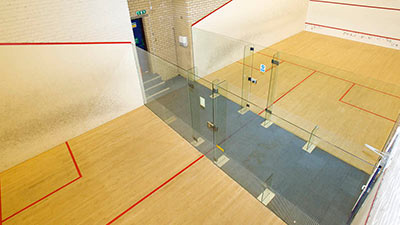
One extreme example is a local wraparound care facility operating in a pair of former squash courts at a local leisure centre. The glass and concrete surfaces make speech communication almost impossible once the level of play noise has built up. Acoustic treatment would be transformational for children and staff alike in a setting like this.
How can acoustics and noise affect planning decisions?
Increased capacity in this sector will inevitably need expanded outdoor play areas and by their very nature, this will mean an increase in noise levels for nearby residential and other noise-sensitive receptors. Noise impact assessments of outdoor play areas should be part of any nursery expansion project to help address and avoid planning concerns, with acoustic advice sought on appropriate mitigation measures. This would include conducting baseline noise surveys and advising on acoustic treatments to be applied to outdoor play areas, such as acoustic fencing and canopies.

Next steps
We will continue to follow the development and roll-out of this Programme and hope that this article helps you to consider acoustics as part of your early years capital expansion project.
If you are a local authority, nursery or other early years facility, architect, or contractor, we can help guide the acoustic design of both indoor and outdoor early years spaces, to ensure you meet and balance the needs of young children, staff and surrounding neighbours.


